
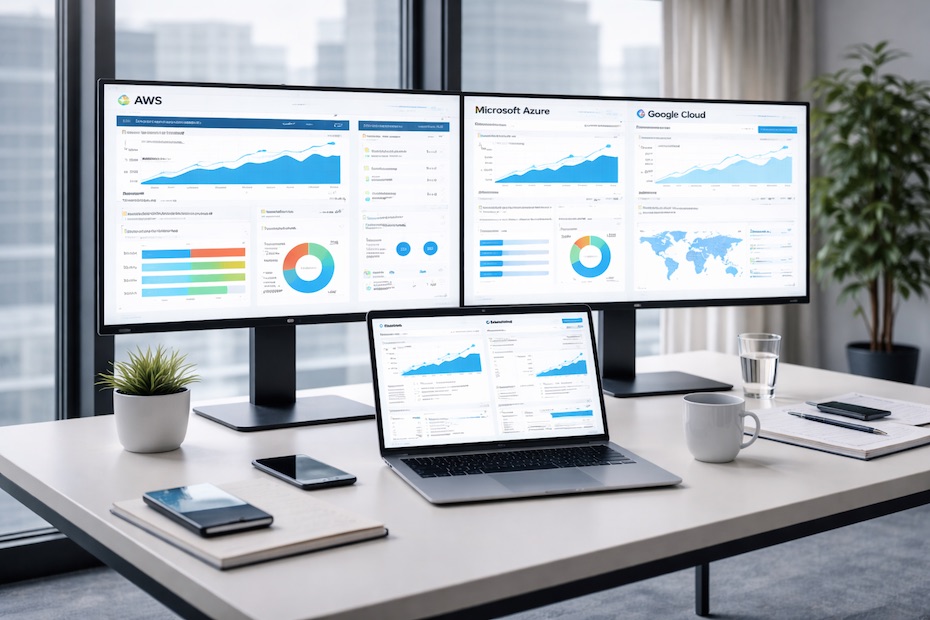
The top cloud platforms for scalable and secure infrastructure combine global reach, built-in security controls, and predictable performance so you can grow without re-architecting systems every year. Choosing the right platform early reduces operational risk while supporting long-term expansion.
This article breaks down five cloud platforms that engineering leaders and executives actively rely on to support scale, resilience, and security. You’ll understand how each platform fits different growth paths, which workloads they serve best, and how to make a confident selection.
Step 1: Amazon Web Services (AWS)
Amazon Web Services continues to lead cloud adoption due to unmatched service breadth and global coverage.
You gain access to the largest network of regions and availability zones, which allows you to deploy applications close to users while maintaining redundancy. This matters when uptime, latency, and global reach directly impact revenue.
AWS places strong emphasis on security as infrastructure scales. Identity controls, encryption services, threat detection, and network isolation tools are built into the platform rather than layered on later. As usage grows, these controls help you maintain consistency across environments without slowing development.
Cost management requires discipline, yet AWS provides granular billing, usage visibility, and long-term pricing options. Organizations that invest early in governance tend to scale efficiently without financial surprises.
Step 2: Microsoft Azure
Microsoft Azure stands out when infrastructure must integrate closely with enterprise systems and identity management.
If your organization already uses Microsoft productivity tools, Azure simplifies access control and governance. Centralized identity management allows teams to enforce policies consistently across cloud and on-prem environments.
Azure’s security posture focuses heavily on identity, access, and compliance readiness. Built-in monitoring, threat detection, and policy enforcement help teams maintain control as infrastructure expands across regions.
Hybrid deployment capabilities remain a major reason companies select Azure. You can manage cloud and local resources through a unified interface, which reduces operational fragmentation during growth.
Step 3: Google Cloud Platform (GCP)
Google Cloud Platform appeals to organizations that prioritize performance, data processing, and modern application design.
You benefit from a global network engineered for high throughput and low latency. This supports data-heavy workloads, real-time analytics, and distributed applications without complex networking configurations.
Security controls operate by default rather than optional setup. Data encryption, access boundaries, and service-level isolation help you scale without introducing gaps as teams expand.
GCP adoption continues to grow among companies building analytics platforms, machine learning systems, and container-based applications. If data velocity drives your business model, GCP provides strong alignment.
Step 4: IBM Cloud
IBM Cloud focuses on security-first infrastructure and regulated environments.
You gain access to private cloud options, dedicated hardware, and strict access controls designed for sensitive workloads. This suits organizations operating in industries where data handling rules are non-negotiable.
Security tooling emphasizes isolation, encryption, and identity enforcement at the infrastructure level. These capabilities reduce exposure during expansion while maintaining operational flexibility.
IBM Cloud works best when compliance, governance, and hybrid deployment matter more than broad service variety. Many enterprises adopt it to modernize infrastructure without disrupting existing control models.
Step 5: Oracle Cloud Infrastructure (OCI)
Oracle Cloud Infrastructure attracts organizations that demand predictable performance and transparent pricing.
You benefit from flat pricing structures that simplify cost forecasting as workloads scale. This clarity supports long-term budgeting without unexpected usage spikes.
OCI emphasizes security by isolating network resources and enforcing encryption by default. These controls support high-throughput systems while maintaining strong protection standards.
OCI adoption continues to grow among database-driven businesses and SaaS platforms that require consistent performance under heavy load.
How Do You Choose the Right Cloud Platform?
You choose the right cloud platform by aligning it with your workload profile, security requirements, and operational maturity.
Organizations with diverse global workloads often select AWS for flexibility. Enterprises built around Microsoft tools gravitate toward Azure. Data-centric teams find GCP effective, while compliance-driven environments lean toward IBM Cloud or OCI.
Real-world experience shows that platform success depends less on branding and more on alignment with internal capabilities and growth plans.
What Security Capabilities Matter Most at Scale?
Security at scale depends on identity enforcement, network isolation, and automated monitoring.
Platforms that enforce least-privilege access by default reduce risk as teams grow. Native encryption ensures data protection without custom implementation.
Automated monitoring and alerting help you detect issues early, which prevents minor problems from becoming systemic failures during expansion.
How Does Cloud Infrastructure Support Long-Term Growth?
Cloud infrastructure supports growth by allowing you to scale resources without redesigning architecture.
Auto-scaling, managed databases, and global load balancing reduce operational overhead. This frees leadership to focus on strategy rather than capacity planning.
Organizations that treat infrastructure as a strategic asset experience faster expansion with fewer disruptions.
Best Cloud Platforms for Secure Scalability
- AWS for global scale and service depth
- Azure for enterprise integration
- Google Cloud for data-driven workloads
- IBM Cloud for regulated environments
- Oracle Cloud for predictable performance
Build Infrastructure That Grows With Your Ambition
Scalable and secure infrastructure determines how confidently you can grow. Each platform on this list supports expansion, yet success comes from selecting the one aligned with your workload, security posture, and financial discipline. When infrastructure scales cleanly, teams move faster and risk stays contained. Strong platform choices reduce friction across engineering, finance, and leadership. Your goal is not just uptime, but sustained execution without disruption.